How to Choose a Calligrapher for Your Event in London
A practical, honest guide — from someone who's actually done it.
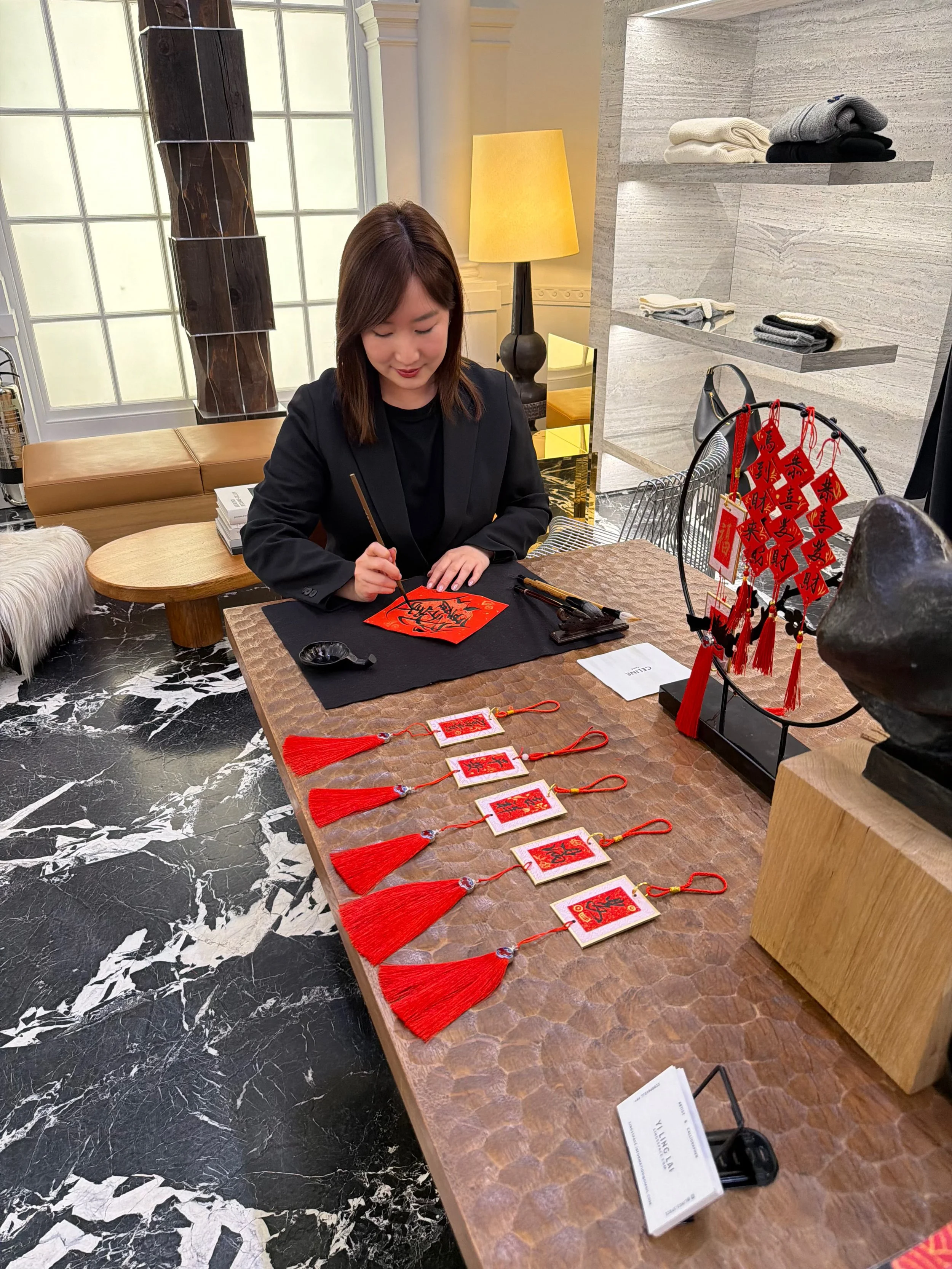
Yi Ling Lai performing live Chinese calligraphy at a London luxury brand event- Celine.
People ask me this more than you'd think: "How do we know we're picking the right calligrapher?"
Sometimes it's a brand manager with a big activation coming up. Sometimes it's someone planning a private event and feeling a bit overwhelmed by the options online.
So I wanted to write something genuinely useful — not a sales pitch, but the kind of advice I'd give a friend. I've been working as a Chinese calligrapher in London for years, collaborating with brands like Celine, Prada, and Diptyque, and I still remember what it felt like to be brand-new to all of this.
1. Start with their speciality — not just their style
There is Western calligraphy, Chinese calligraphy, Arabic script, and more. Each has its own visual language, cultural depth, and years of technique behind it. They're not interchangeable.
If your event celebrates Chinese New Year, the Mid-Autumn Festival, or anything rooted in East Asian culture, you want a calligrapher who genuinely knows that world — not someone who learned a few brushstrokes on YouTube. Guests who are familiar with the tradition will notice.
“Ask yourself: does this calligrapher’s background actually match the story my
brand or event wants to tell?”
2. Look at their event experience — not just their studio work
A beautiful finished piece on Instagram is one thing. Performing live in front of 100 guests at a luxury hotel activation is something else entirely. The brush strokes, the composure, the ability to chat with guests while still producing clean work — that takes a different kind of skill.
When looking at their portfolio, check for:
Photos or short videos from actual live events (not just framed pieces)
Named brand collaborations — this shows they can handle professional environments
Workshop or teaching experience — calligraphers who teach tend to be far more comfortable engaging with an audience
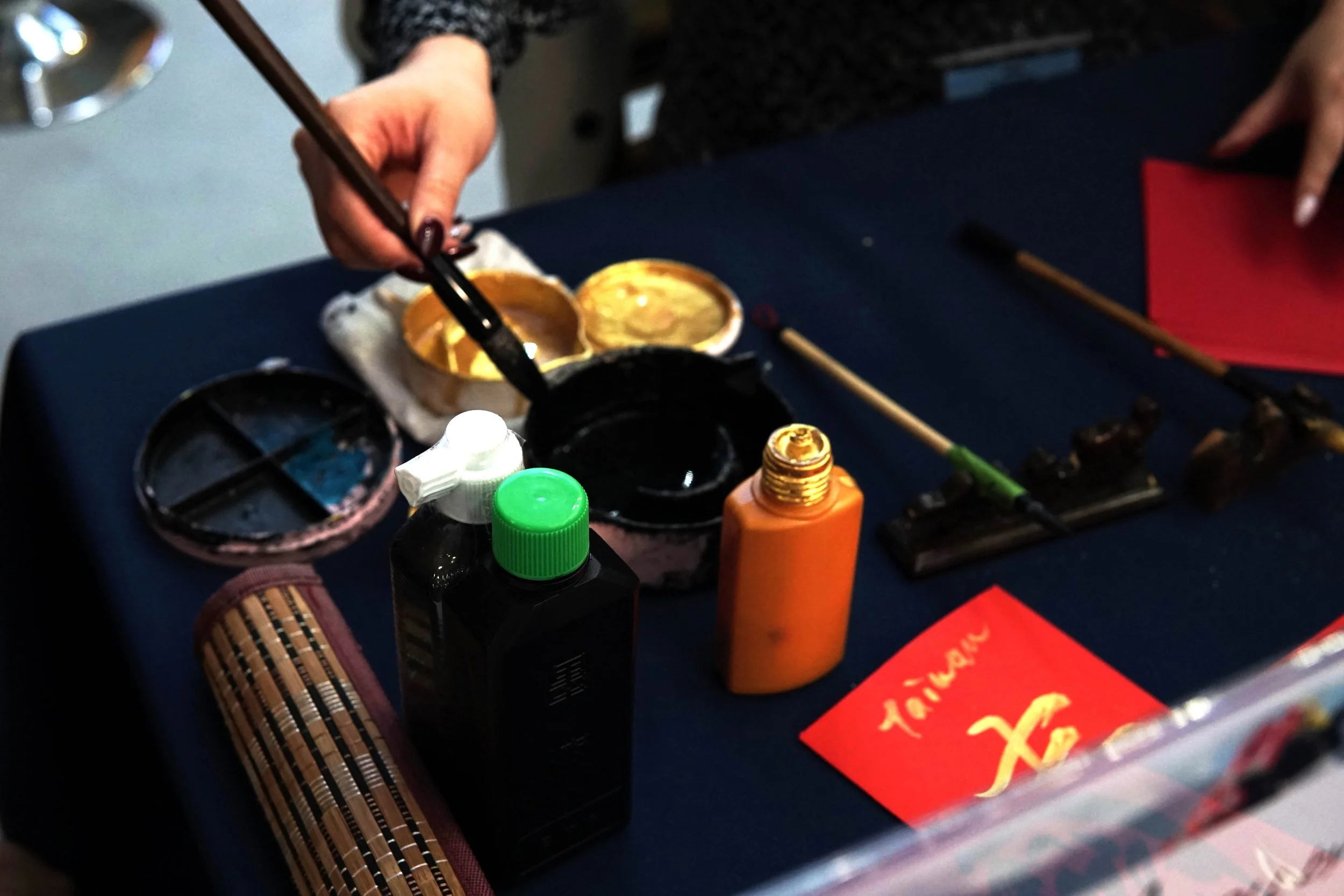
3. Live performance or pre-made pieces? Know the difference
There are two main formats, and neither is universally better:
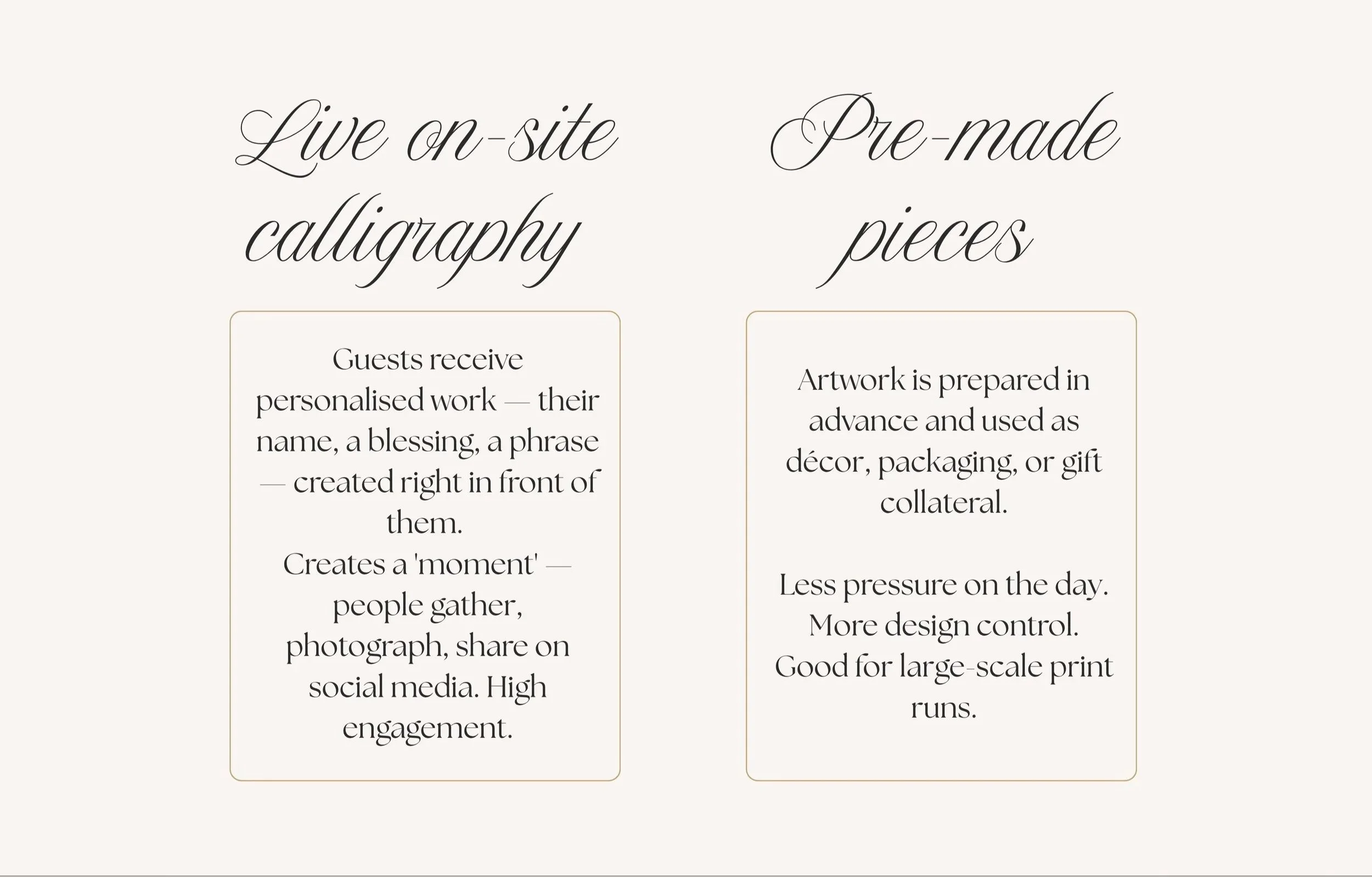
Many luxury brand activations combine both — pre-designed branded elements alongside live
personalisation for VIP guests. It's worth discussing this with your calligrapher early on.
4. Ask these questions before you book
A professional calligrapher should answer these without hesitation. If responses feel vague, that's a signal worth paying attention to.
(1) What materials do you bring, and what does the venue need to provide?
Logistics matter — especially for hotel or outdoor venues.
(2) Have you worked with a similar audience or event format?
Experience with VIP or corporate crowds is different from open workshops.
(3) What happens if a guest makes an unexpected request on the day?
Composure and flexibility are underrated skills.
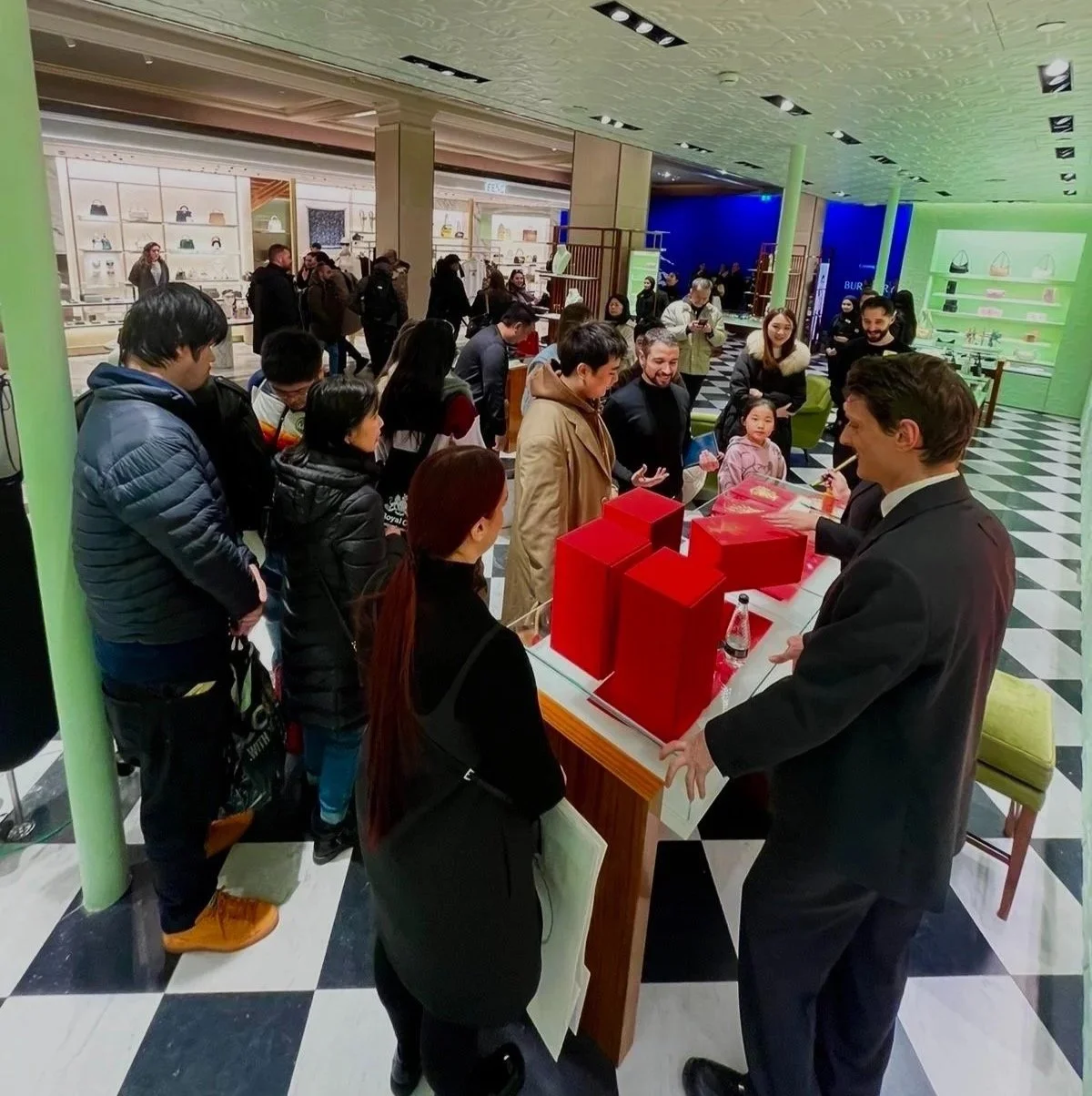
Guests watching a piece being created in real time at Prada — one of the most engaging moments at my event.
5. Think about how they will represent you on the day
This one often gets overlooked in the booking process. The calligrapher you hire will be talking to your guests — explaining the meaning behind each character, answering questions, making people feel welcome. They become part of your brand experience for that entire event.
Look for someone who can explain the art in simple, engaging language — not just to people who already know it, but to guests who are encountering Chinese calligraphy for the very first time.
“At my events, I always take a moment to share the story behind what I’m writing.
A blessing isn’t just ink on paper — it carries intention. Guests feel that
difference.”
6. Budget: what to realistically expect
Bespoke event calligraphy in London is a specialist, time-intensive service — and pricing reflects that.
What you pay for isn't just the ink. It's years of training, the preparation, the materials, and the ability to produce beautiful work reliably under pressure.
Pricing is typically influenced by:
Duration — half day vs. full day
Number of pieces expected and their complexity
Custom brand work (logos, slogans) vs. personal blessings
Travel and material costs
If you're unsure what's realistic for your event size and format, feel free to reach out — I'm always happy to advise even before you're ready to formally enquire.
7. Book early — especially around these dates
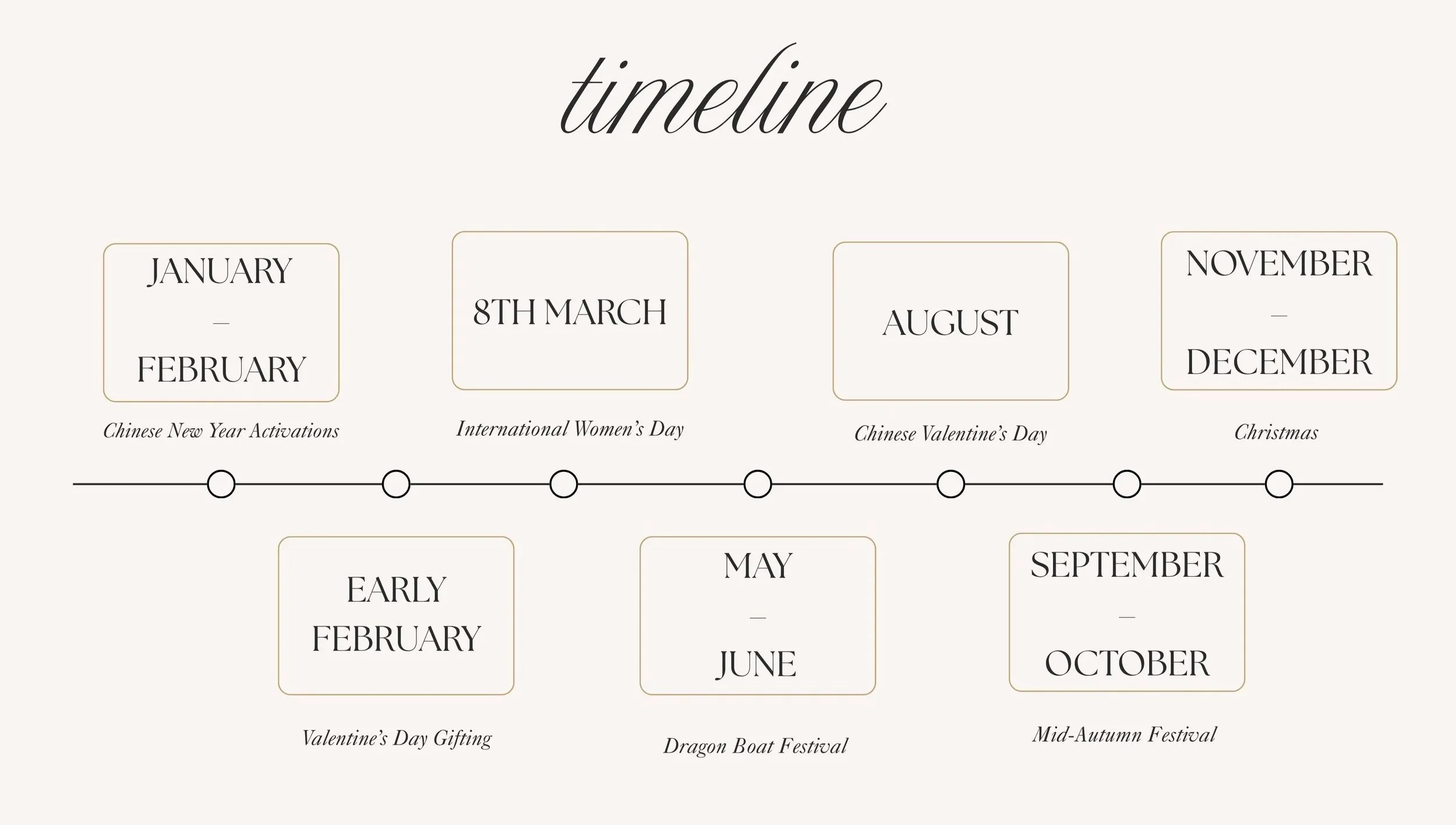
London-based Chinese calligraphers fill up quickly during cultural peak seasons. If your event falls near any of these, I'd recommend reaching out 6–8 weeks in advance:
Chinese New Year Activations — January–February
Valentine’s Day Gifting — Early February
International Women’s Day— 8th March
Dragon Boat Festival Activations — May–June
Qixi Festival (Chinese Valentine’s Day) Gifting — August
Mid-Autumn Festival Activations — September–October
Christmas Activations — November–December
Ready to make your event unforgettable?
I'd love to hear about what you're planning —
whether it's a luxury brand activation, a private dinner, or a corporate cultural event.